
PUBLIC LECTURES & EXHIBITIONS
As part of our mission to operate as a centre for international architectural discourse, education, and research in Paris, and in addition to its pedagogical programmes, the Institute offers a vibrant series of public events, lecture series, and exhibitions.
Details of future events can be found below alongside recordings of past lectures.
THE ARCHITECTURAL INSTITUTE & RIBA EUROPE CHAPTER
PUBLIC LECTURE SERIES - 2025/26
The Architectural Institute & RIBA Europe Chapter 2025/26 public lecture & exhibition series is a joint educational and cultural CPD programme offered in collaboration with the RIBA Europe Chapter.
The staff, students, and all those interested in Architecture and Design are invited to join us for our public lecture series. Lectures start at 7pm and conclude at 9pm (unless otherwise indicated), the bar opens at 6:30pm for refreshments. Exhibitions are open from 10am - 6pm, (unless otherwise indicated). Past lectures are available to watch below.
The lectures below can count as unstructured CPD towards your ARB & RIBA CPD record. Certificates available on request. Please write to admin@architectural-institute.com
Public Lecture - Emanuele Coccia, “The Architecture of Modern Love”.
Friday 26th September 2025, 5pm
@Architectural Institute, 117 rue Lamarck, 75018 Paris
Emanuele Coccia is an Italian philosopher and associate professor at the École des Hautes Études en Sciences Sociales (EHESS) in Paris. Trained in medieval philosophy, his work has evolved to explore contemporary issues such as the nature of life, images, ecology, and the metaphysics of the everyday. He is the author of several influential books, including The Life of Plants, Metamorphoses, and Philosophy of the Home, which blend philosophy with art, science, and culture. Coccia’s interdisciplinary approach has positioned him as a key figure in current debates on ecology, hybridity, and post-human thought. (Cover image by Yushi Li).
Public Lecture - Robert McManus, “The Making of LICK Magazine”.
Thursday 9th October 2025, 7pm - 9pm
@Architectural Institute, 117 rue Lamarck, 75018 Paris
The process of starting LICK magazine, approaching publishing and creativity through the lens of an architect with editor-in-chief Robert McManus.
Public Lecture - Clare Patrick, “Adrienne Fidelin: Reconsidering the Avant-Garde Networks of 1930s Paris and London”.
Thursday 23rd October 2025, 7pm - 9pm
@Architectural Institute, 117 rue Lamarck, 75018 Paris
Clare Patrick will present on her recent residency as the Marie-Solanges Apollon laureate at AWARE, Paris, and her subsequent archival explorations as a British Art Network Bursary Awardee 2025-26: Tate and Paul Mellon Centre.
Her project interrogates the underacknowledged presence of Adrienne Fidelin as a key contributor and collaborator who navigated diasporic communities traversing, what Paul Gilroy has termed the ‘Black Atlantic’, and the European avant-garde in interwar Paris. By revisiting Fidelin’s relationships with contemporaries such as Lee Miller, Eileen Agar, Man Ray, and Roland Penrose, this research recontextualises Fidelin within a lineage of performers, artists, and thinkers active in Paris and the UK during the 1930s.
With a methodology of exploratory dialogue, critical archival work, and collaborative thinking, her inquiry engages the interplay of movement, influence, alliance, and necessary or impelled opacity as critical frameworks. This approach offers methodologies for understanding transitory encounters in Paris and globally, exploring how these transnational dynamics shaped cultural space and production.
Clare Patrick is an independent curator, writer, and educator focusing on installation art and transdisciplinary spatial practice. Born and raised in Cape Town, South Africa, she is guided by collaborative spatial intervention as critical praxis. Her research has explored art historiography, the cultural work of transnational memory, and reparative responsibility within institutions and collections. Her practice has unfolded in exhibitions and workshops across South Africa, the UK, France, Ireland, the US, and Morocco and has been featured in publications including ArtForum, Vogue, The New York Times, Contemporary & AWARE, and the British Journal of Photography. She currently lives and works between Paris, London, and Cape Town.
Public Lecture - Pippo Ciorra, “Learning from Bad Architects”.
Monday 10th November 2025, 7pm - 9pm
@Architectural Institute, 117 rue Lamarck, 75018 Paris
Pippo Ciorra is an architect, critic, and Senior Curator of Architecture at MAXXI, the National Museum of 21st-Century Arts in Rome. A leading voice in Italian architectural discourse, he combines academic, curatorial, and critical practice to explore how architecture engages with social, cultural, and environmental change. Educated at La Sapienza and IUAV Venice, he has taught widely across Italian architecture schools and currently serves as Professor of Architectural Design at the University of Camerino, where he also coordinates the international PhD programme Villard d’Honnecourt. His curatorial work at MAXXI has redefined the museum’s architectural remit, positioning it as a space for experimentation and public debate. A prolific writer and former editor of Casabella, he has published on figures such as Ludovico Quaroni and Peter Eisenman, and on the shifting conditions of architectural practice and representation. Through his writing, teaching, and exhibitions, Ciorra continues to articulate a vision of architecture as an active cultural agent within contemporary society.
Public Lecture - Daniel Nowak (Danietella Novacci), “The Student Voice: Rethinking Architectural Education in Europe”.
Thursday 20th November 2025, 7pm - 9pm
@Architectural Institute, 117 rue Lamarck, 75018 Paris
Daniel Nowak (Danietella Novacci) is the Students’ Representative and a Committee Member of RIBA Europe. He studies architecture at the Cracow University of Technology, having previously studied at the Politecnico di Milano and the Technological University of Havana (CUJAE). His professional experience includes working with Medusa Group — one of Poland’s leading architectural practices — and the Swiss-Swedish studio HelsinkiZurich Office
In this lecture, “The Student Voice: Rethinking Architectural Education in Europe”, Daniel explores how students today perceive architecture and its role in society, reflecting on the gap between what schools teach and what architects truly need in practice. Drawing on reflections from students across Europe, he examines how education can evolve to prepare architects not only to design buildings, but to engage with communities, respond to social challenges, and shape the future of the profession.
Public Lecture - Mariabruna Fabrizi, Socks Studio, “The Construction of Imagination”.
Thursday 4th December 2025, 7pm - 9pm
@Architectural Institute, 117 rue Lamarck, 75018 Paris
The lecture explores architectural imagination as a structured and deliberate process. By connecting architecture with research in cognitive science, it proposes a new framework for understanding how imagination can be systematically constructed and directed within architectural practice, using specific tools and devices that draw on internal cognitive structures.
Moreover, by analysing the mechanisms underlying imaginative thought, the research demonstrates the cyclical relationship between imagination and space: imaginative structures emerge from interactions with space, are then externalised and spatialised, and in turn influence the very foundations of imagination once again. A series of projects by Microcities, both built and theoretical, provide an ongoing demonstration of the potential to spatialise imagination.
Public Lecture - Luca Poian, Luca Poian Forms, “Contextual Iconic”.
Thursday 22nd January 2026, 7pm - 9pm
@Architectural Institute, 117 rue Lamarck, 75018 Paris
Luca Poian is a London-based architect with a keen interest in architectural tectonics. His work spans a variety of scales and uses and is characterised by a rigorous approach that integrates materials, construction and context.
Luca studied at the Technical University in Vienna and at the Venice University of Architecture (IUAV), where he graduated with honours in 2003. He started his career at Foster and Partners in London and Abu Dhabi, where he was site architect for two of the most prestigious cultural developments in the UAE: the Zayed National Museum on Saadiyat Island and the Masdar University Campus. Following his experience at Foster and Partners, Luca joined the London offices of Skidmore, Owings and Merrill, where he worked on a wide range of projects across Europe and the Middle East, including the extension to the United Nations headquarters in Geneva and the winning competition scheme for the adaptive restoration of the Hajj Terminal at King Abdul Aziz International Airport in Jeddah, KSA.
Luca founded LUCA POIAN FORMS in 2019. The practice’s portfolio includes a wide range of award-winning public facility projects, including cultural centres, places of worship, transport infrastructure and temporary pavilions, as well as small-scale residential buildings. The practice’s work has been widely published and has taken part in exhibitions worldwide.
In Contextual Iconic, Luca Poian will articulate an architectural position that reframes the idea of the icon as inseparable from its context. Grounded in a design process attentive to materials and construction, his work explores how architectural identity can emerge from material intelligence, tectonic clarity and a deep reading of place. During the lecture, Poian will present a curated selection of three projects from his practice, using them as lenses to reflect on how contemporary architecture can be simultaneously expressive and rooted—producing forms that resonate not by contrast, but by belonging.
Public Lecture - Kelsey Rico, Design Research Diploma, Architectural Institute, “Textiles as Architectural Space”.
Friday 20th February 2026, 7pm - 9pm
@Architectural Institute, 117 rue Lamarck, 75018 Paris
Textiles as Architectural Space examines textiles as essential architectural elements that contribute to the development of spatial enclosure. She explores themes of liminality, erasure, temporality, materiality, and adaptability in textiles. Through analyzing ancient historical case studies, the influence of modernist idealogies, contemporary practices, and material innovations, her research demonstrates how curtains, rugs, and other textiles function as thresholds, spatial dividers, and symbolic devices rather than mere decoration. Her work ultimately seeks to reposition textiles within architectural discourse as active spatial systems.
Kelsey is a licensed practicing architect in the USA. She holds a liberal arts degree from Swarthmore College and earned her master's degree from the Yale School of Architecture, where she participated in the Jim Vlock Building Project and the Rome summer drawing program.
For the last several years, Kelsey has worked at a New York-based architecture firm, developing a strong foundation in high-end residential architecture across the United States. Alongside practice, she assists in tutoring design studio at the Architectural Institute.
Public Lecture - Maria Fedorchenko, Architectural Association, “Active Speculation and Infrastructural Futures: A Hybrid Research-Design Methodology”.
Thursday 26th February 2026, 7pm - 9pm
@Architectural Institute, 117 rue Lamarck, 75018 Paris
In this lecture, I consider how we might respond to complex infrastructural systems and dynamic processes while retaining architectural expertise. Drawing on more than a decade of experimentation in my research-design studio at the Architectural Association, I focus on projects that address circular material ecologies, transit infrastructures, and systemic interdependencies. Seeking more general results, I outline an emerging working methodology that bridges analytical and speculative modes—linking data-driven diagnostics and world-modelling, cartographic and diagrammatic tools, as well as narrative and visual techniques. I reconstruct the key stages of work: constructing and visualising contexts; mapping processes and building microcosms; and formulating futures and architectural scenarios. Our hybrid methodology moves across ideological camps, media and scales—recovering architecture’s ability to negotiate between fact and fiction, diagram and narrative, abstract and concrete. It is also a call for speculative architectural projects that act on current crises and project radical alternatives.
Maria Fedorchenko is a co-founder of Plakat Platform for architectural provocations, and a co-director of Karta Architecture. Her research focuses on disciplinarity, design-research methods and tools of representation. She teaches at the Architectural Association, School of Architecture, in London.
Public Lecture - Julijonas Urbonas, “Cosmic Imagination and Expanded Field of Architectural Fiction”.
Thursday 26th March 2026, 7pm - 9pm
@Architectural Institute, 117 rue Lamarck, 75018 Paris
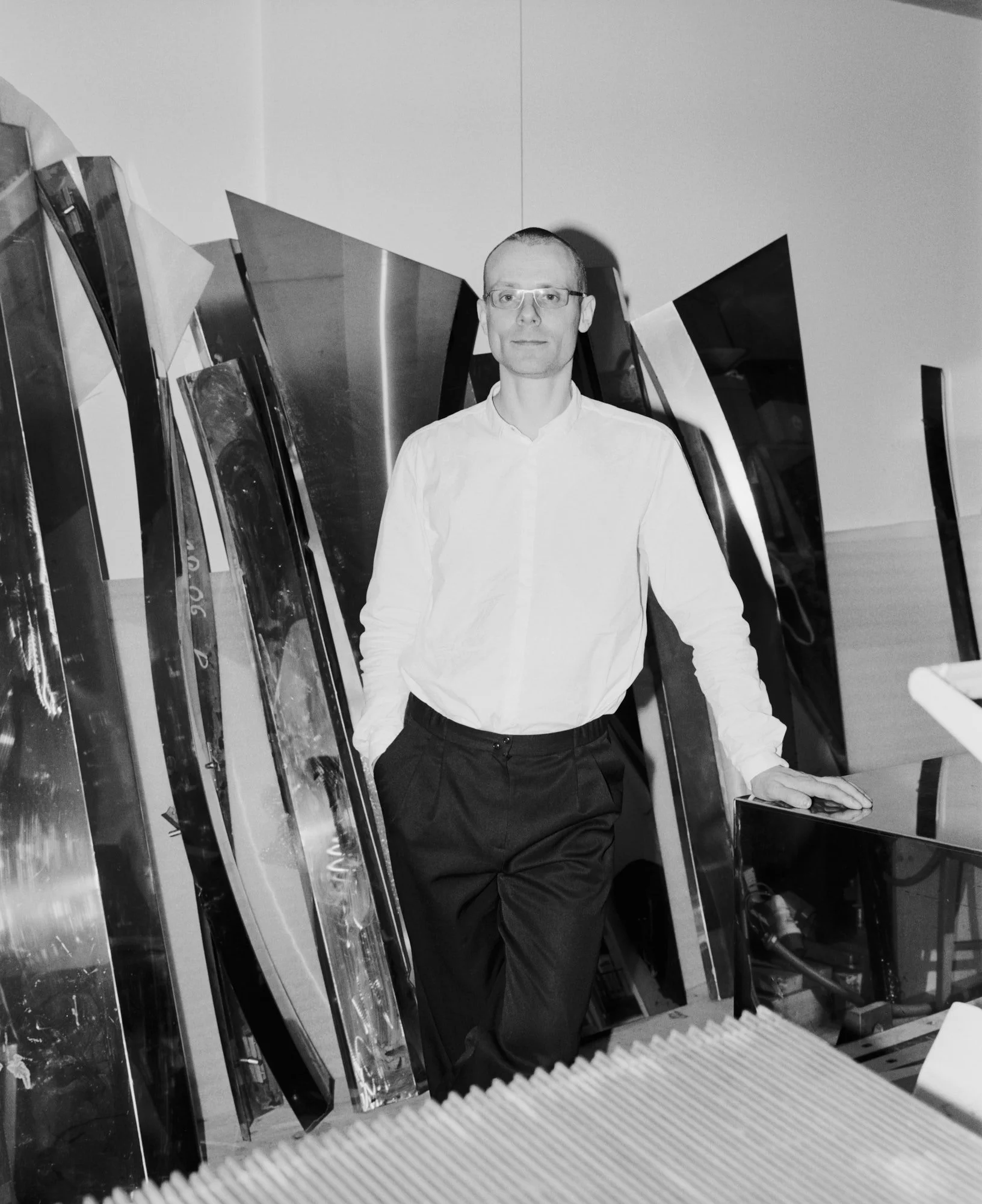
What happens to architectural imagination once it leaves Earth? Crossing the Kármán line, the boundary between the earth’s atmosphere and outer space, it becomes disoriented. After all, architecture has evolved in the earth’s ecosystem, held by gravity and human care. Catapulted up there, imagination is confronted with the hostility of outer space, otherworldliness at its most acute. Even though the arts, science, fiction and religion — to name a few — have often been reimagined from the perspective of the cosmos (with the prefix ‘astro’ marking such a departure from terrestrial thinking), most of these domains of thinking and making suffer from a certain degree of Earth sickness. For example, faced with humanity’s survival, too often they simply search for a shelter in the cosmos that is merely a replica of Earth based on current human conditions or our recent history. The ground is lifted up, turned upside down, suspended in midair, and yet the sensual, psychological and social planes are often, if not always, left Earthbound. The majority of space programmes around the world manifest such a terrestrial conservatism, often underpinned by material and (astro)ecological exploitation, colonialism and warfare. How can we attune architectural imagination to such a departure from our terrestrial origins?
Julijonas Urbonas is an artist, designer, researcher, engineer, founder of Lithuanian Space Agency, associate professor at Vilnius Academy of Arts, former CEO of Klaipėda city’s amusement park. Currently lives and works in Vilnius. Julijonas' artistic research revolves around gravitational aesthetics, extraterrestrial arts, critical design, amusement park engineering, performative architecture, scenography and postkinetic arts. He has represented Lithuania in several triennials and biennials such as the 17th Venice Biennale of Architecture, and received international acclaim, including being awarded the prestigious Award of Distinction in Interactive Art at the Prix Ars Electronica 2010 and the Lithuanian Government's Culture and Arts Prize 2024.
Public Lecture - Tim Richardson, “The Landscape of Man [and Woman]”.
Thursday 23rd April 2026, 7pm - 9pm
@Architectural Institute, 117 rue Lamarck, 75018 Paris
Tim Richardson is a critic and historian of the visual arts, and the author of more than 25 books. He has taught at the universities of Oxford, London and Vienna; his online diploma course on English landscape history is currently available via Oxford’s continuing education department. He is an adviser to the National Trust in the UK on landscape and garden issues and as a journalist has been gardens editor at Country Life magazine, landscape editior at Wallpaper, a long-term columnist at the Daily Telegraph and is currently art critic of The Idler magazine.
Tim’s latest book (published April 2 2026) is a new edition of Sir Geoffrey and Susan Jellicoe’s classic work The Landscape of Man, first published in 1975. This is arguably the most ambitios and wide-ranging book ever published in any design discipline, spanning as it does every human epoch and civilization, from the Caves of Lascaux, through ancient Egypt, Angkor Wat and Ancient China, up to the 2oth century. Tim has added a new section to the book which brings it up to date, and has also replaced all the original black and white images with colour. In this lecture, he will decsribe the Jellicoes’ methodology, which was based on the theories of Carl Jung and the tenets of modern art, and take us on a journey through time and landscape.
Public Lecture - Simone Gobbo, DEMOGO, “Plan-séquence”.
Friday 24th April 2026, 4pm - 6pm
@Architectural Institute, 117 rue Lamarck, 75018 Paris
The plan-séquence cinematographic technique based on a continuous long take, represents a conceptual device through which the exhibit interprets a specific architectural research approach. The lack of coincidence between time of representation and time of experience allows architecture to be read as being structured through a multitude of long shots with a gradual progression of perception.
The projects refuse the idea of architecture as a static and complete object, but instead propose an articulate spatiality generated through sequences of moving points of view. Space reveals itself through the shifting of positions of glances which produce a plurality of imagery and relations between them. Context, materials, landscapes and urban fabric do not only function as mere backdrops but become dynamic actors within the architectural experience: conditions that are activated through movement and perception, within the depths of field of architecture, understood as an extension of the gaze across space and time.
DEMOGO is an Italian architecture studio founded in 2007 by Simone Gobbo (1980), Alberto Mottola (1979), and Davide De Marchi (1980). DEMOGO’s work explores the complex relationship between contemporaneity and spatial articulation, adopting an authorial approach attentive to the perceptual dimensions of living environments. Through its research, the studio places particular emphasis on the evocative qualities of places, developing a constantly evolving language shaped by architectural adaptations and interpretations.
DEMOGO complements its design practice with theoretical research, regularly published in leading international architecture journals. The studio is frequently invited to present and exhibit its work through conferences, exhibitions, and editorial projects. Its projects have notably been showcased at the Venice Architecture Biennale and the Milan Triennale, and are included in the permanent collection of MAXXI (National Museum of 21st Century Arts) in Rome. Alongside their professional activity, the partners teach at IUAV University of Venice, the University of Genoa, and the University of Ferrara. Finally, DEMOGO develops projects and participates in international competitions in collaboration with some of the most prestigious international architecture firms.
Public Lecture - Umberto Napolitano, LAN, “Spaces without species”.
Thursday 11th June 2026, 7pm - 9pm
@Architectural Institute, 117 rue Lamarck, 75018 Paris
“We live in space”: it is this (paradoxical and false) self-evidence that Georges Perec interrogates in “Species of Spaces” in 1974, at the request of Paul Virilio, who wished to launch his collection “L’espace critique” at Galilée with this title.
Halfway between an essay and prose poetry, Perec’s book takes a sharp and critical look at functionalism and architecture, questioning the ways we inhabit and think about spaces that are “multiplied, fragmented, and diversified.”
“Apartments are built by architects who have very specific ideas about what an entrance, a living room, a master bedroom, a child’s room, a maid’s room, a hallway, a kitchen, and a bathroom should be. And yet, initially, all rooms look more or less alike; there’s no need to try to impress us with talk of modules and other nonsense: they’re nothing more than cubes, or let’s say rectangular parallelepipeds…. I don’t know, and I don’t want to know, where functionalism begins or ends.”
It seems to us that fifty years after its publication, Georges Perec’s “Species of Spaces” has never been more relevant. Space is in doubt: between economic and ecological crises, tsunamis, massive wildfires, droughts, and epidemics, the beginning of this century has shifted societal, environmental, and consequently architectural stakes.
“I wish there were stable, immobile, intangible, untouchable, almost unreachable places, unchangeable, rooted; places that would be references, starting points, sources.
... But such places do not exist, and it is because they do not exist that space becomes a question, ceases to be self-evident, ceases to be embodied, ceases to be appropriated.
Space is a doubt: I must continually mark it, point it out; it is never mine, never given to me, I must conquer it.”
As a symbol of stability and permanence, the art of building must now contend with an unpredictable future. If the classical era was one of interpretation and the modern era one of prediction, the 21st century ushers in an age of indeterminacy. To transform this state of generalized uncertainty into a driving force for projects, it is essential to observe, describe, and understand a world that has become complex, heterogeneous, and contradictory.
On the occasion of the conference — originating from the exhibition of the same name, “Spaces Without Species” — LAN extends and reactivates the questions opened by the original project. Rather than presenting a fixed inventory of eleven spaces, the lecture reframes them as an open set of investigations.
These spaces stand at the crossroads of several typologies, climates, and uses. They are spaces of doubt, marked by opportunism and the uniqueness of their context.
Each space is a fragment of a place, an invitation to redefine it, traverse it, reinvent it. These are meeting points where uncertainty converses with memory, where use hesitates, withdraws, or reinvents itself otherwise.
All share the ambition of embodying potential responses to current transformations.
Eleven new species of spaces, or rather, eleven spaces without species.

APPLY
Applications for the 2027/28 academic year are currently open. Start your application today.